

Buildings have much longer depreciation periods, typically in the range of 20 to 30 years. Land is not depreciated at all, since it is considered to have an infinite lifespan. Depreciable assets are reported on the balance sheet under the asset heading property, plant and equipment. No, land is not a depreciable property and cannot be depreciated as it is considered to last forever and not have a useful life. It is one of the few assets that cannot be depreciated because of its everlasting factor, meaning that its useful life is considered infinite.
What is the approximate value of your cash savings and other investments?
PepsiCo Inc. lists land, buildings and improvement, machinery and equipment (including fleet and software), and construction-in-progress under its PP&E account. The average useful life for straight-line depreciation for buildings and improvement is years and 5-15 years for machinery and equipment. In the fiscal year 2021, the company recorded $2.48 Partnership Accounting billion in depreciated expenses and had $24.42 billion in accumulated depreciation. Depreciation allows businesses to spread the cost of physical assets over a period of time, which has advantages from both an accounting and tax perspective. Businesses have a variety of depreciation methods to choose from, including straight-line, declining balance, double-declining balance, sum-of-the-years’ digits, and unit of production . The business entities depreciate fixed assets every year irrespective of production or sales.
Straight-Line Method
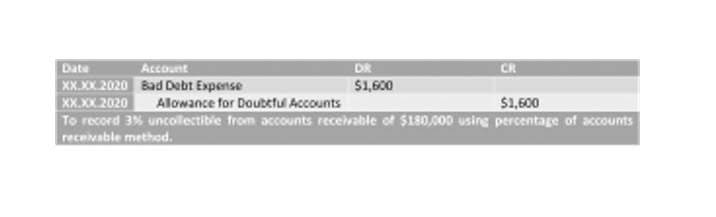
The first and last years deduct only $5,000 as it’s assumed the asset was placed in service mid-year. The basic journal entry for depreciation is to debit the Depreciation Expense account and credit the Accumulated Depreciation account. Over time, the accumulated depreciation balance will continue to increase year after year as more depreciation is added to it until it equals the original cost of the asset.
Depreciable Assets Capital Gain
Income statement accounts are referred to as temporary accounts since their account balances are closed to a stockholders’ equity account after the annual income statement is prepared. Also, depreciation expense is merely a book entry and represents a “non-cash” expense. Therefore, depreciation ledger account is a process of cost allocation—not of valuation. Mannequins are long-term tangible assets of a clothing boutique which is why they are depreciable in its accounting books. The concept of depreciation in accounting vastly differs from the concept of depreciation in economics. In accounting, we assume the value of cash to remain stable over time and ignore the effects of inflation on monetary assets.
- As these tangible assets age, they become less effective, and their value falls.
- Some restrictions apply to the types of property that can be depreciated this way, so check with a tax professional before moving ahead with claiming it.
- In this example, the depreciation will continue until the credit balance in Accumulated Depreciation reaches $10,000 (the equipment’s depreciable cost).
- Tangible (physical) assets depreciate, while you expense intangible assets using amortization.
The other methods of calculating depreciation are the unit of production method and double declining balance method. According to the IRS, “The Modified Accelerated Cost Recovery System (MACRS) is the proper depreciation method for most property”. This method of depreciation allows a larger tax deduction in the early years of an asset and less in later years.
- He adds that consumers can slow the depreciation rate of electronics by keeping the item in a case, using a screen protector, and saving all original manuals and packaging.
- This format is useful because the balance sheet will subtract each asset’s accumulated depreciation balance from its original cost.
- As exhibited in the tables above, a depreciation schedule simply allows businesses to stay on top of planned depreciation expenses over the useful life of an asset.
- Multiply the van’s cost ($25,000) by 40% to get a $10,000 depreciation expense in the first year.
- Thus, the depreciable value diminishes every year, and so does the depreciated expense.
- Carrying value is the net of the asset account and the accumulated depreciation.
- I recommend Bookkeeping All-in-One for Dummies for those folks new to bookkeeping.
Why should depreciation be calculated?
- Depending on the useful life of the asset, this means businesses could continue enjoying tax-related benefits on the purchase even several years later.
- Depreciation is calculated by the 40 cents cost per unit of production and deducted from the depreciable value of $40,000.
- We may earn a commission when you click on a link or make a purchase through the links on our site.
- As you probably know, the basic calculation of depreciation involves dividing the cost of a fixed asset over its useful life using a suitable depreciation method.
- However, the allocation of depreciation in each accounting period continues on the basis of the book value without regard to such temporary changes.
- All such information is provided solely for convenience purposes only and all users thereof should be guided accordingly.
- With this accelerated method, the numbers of years are first added together to determine the denominator of the depreciation rate.
At the end of three years the truck’s book value will be $40,000 depreciable assets examples ($70,000 minus $30,000). To illustrate the cost of an asset, assume that a company paid $10,000 to purchase used equipment located 200 miles away. The company then paid $2,000 to transport the equipment to its location. Finally, the company paid $5,000 to get the equipment in working condition. The company will record the equipment in its general ledger account Equipment at the cost of $17,000.
Depreciation Base of Assets
For financial statements to be relevant for their users, the financial statements must be distributed soon after the accounting period ends. An accounting loss results from expensing a revenue-generating asset instead of capitalizing it and thus, not creating any future value for the company. In this event, the book value of the asset becomes smaller each year.
Submit to get your retirement-readiness report.
- Therefore, always consult with accounting and tax professionals for assistance with your specific circumstances.
- Instead, the balance in Accumulated Depreciation is carried forward to the next accounting period.
- Depreciation does not result from any systematic approach but occurs naturally through the passage of time.
- Depreciation is the gradual decrease in the value of a company’s assets.
Second, that asset could reach the end of its useful life—then it is no longer is being depreciated. Straight-line depreciation is a good option for small businesses with simple accounting systems or businesses where the business owner prepares and files the tax return. If you have expensive assets, depreciation is a key accounting and tax calculation. Depreciation is different from amortization because depreciation only relates to tangible assets, while amortization relates to intangible assets.